









The 21st century is the century of the fight for survival. Only the strongest will survive! And these are the ones who know how to use the power of the mind and who have mastered efficient mental skills.....
This manual is a practical guide, “a mental passport for everyday life” on the road to discovery and raising the positive power of the human mind in the 21st century. It presents a unique combination of the author’s expert experience, knowledge from modern science, and the author’s innovative solutions, patents and brands.


This is a book of essays on contemporary social psychopathology.
Is today’s world film or reality? Who are the replicants, mutants and monsters in modern society? Can we recognize the contemporary political psychopathology, the schizophrenic signs of the social disintegration…? Do we live in the ideology of fetishism? Is there any chance for a healthy society?
There are questions and answers in this book…

This book contains the results of a unique investigation and insight into a specific domain of human communication: the connection between the creative process and psychoanalysis. The ultimate aim of this work is to reveal the powerful potential of the human psyche that remains hidden at different levels of the uncouscious and to offer a means of realizing the countless possibilities of the Ego’s transformation.
The essays collected here on the creative process and psychoanalysis were written over a period of 12 years of research. The earlier essays present the author’s research into the work of Freud, Jung, Lev Vygotsky, Ernst Kriss, Kurt Eissler, Vladeta Jerotic and others. The later essays in the book are the product of the author’s passionate commitment to sharing his personal experience and further exploring the depths of this fascinating aspect of the human psyche…


“The basic goal of psychodrama is to develop spontaneity that will enable the release of creativity in real life. The space in which these mechanisms are activated is that of an encounter: of one person with another; of an individual with a group; of an individual with themselves; of an individual with elements from their surroundings; of an individual with their images, fantasies, suppositions, wishes, assessments and misperceptions; with their past, present and future; with their dream and their reality… Having achieved spontaneity… the participant in these encounters is ready to take on the responsibility to make creative changes at the moment of action, to face the conflict between the inner needs and the outer forces of reality, finding in that moment, as a “revolutionary category”, an adequate creative solution. Thus the individual becomes an active agent and initiator of changes and no longer a passive recipient…”
This book is the result of the author’s twenty years of authentic experience in applying psychodrama and sociodrama in different fields of human communication.


A psychiatrist is trapped, forced into finding a solution to the mystery of the imagined pregnancy of his client, Sarah, who together with the help of her deranged mother is making his life a living hell. Can the psychiatrist find help in the institutions of the system? Who are the heroes in this story?
* * *
This is the personal drama of a Balkan psychiatrist torn apart in a pathological daughter-mother-absent father relationship;a drama that reflects fundamental conflicts in today’s world in its portrayal of an absurd struggle between insanity and intellect, violence and order…



Everything happens in fifteen minutes! There are three ten-year-old children grown up in three different family backgrounds. Suddenly, the situation brings their destinies into the dramatic focus. On the one side there is competitive and violent behavior based on the traumatic experiences and on the other, a creative one, built on the basis of love and support…
This is a script for a short film and at the same time an interesting text for reading.

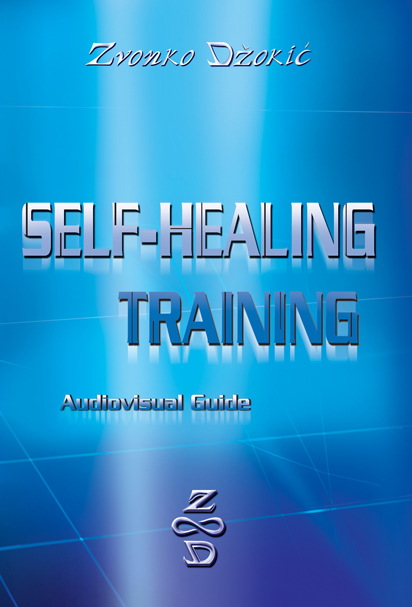
This practical guide consists of a highly effective training and therapeutic stress management programme. After approximately 20 minutes of interactive use, you will feel deep relaxation of your body and mind accompanied by the release of endorphins!
You can take it with you and use it wherever you are… Enjoy it!


This practical guide consists of a highly effective training and therapeutic stress management program. It focuses on cleaning the accumulated stress-reactive derivatives in the inner/visceral organs.
You can take it with you and use it wherever you are… Enjoy it!


This practical guide consists of a highly effective training and therapeutic stress management program. It focuses on installing positive thoughts and energy into your organism.
You can take it with you and use it wherever you are… Enjoy it!

This practical guide consists of a highly effective training and therapeutic stress management program. It focuses on provoking and installing the self-healing capacities according to the method of Concentric Self-Healing.
You can take it with you and use it wherever you are… Enjoy it!


Summary
The individual is now more then ever left alone to take care of himself or herself. One is forced to independently estimate, plan and make decisions concerning the preservation of one’s survival, as well as the development of one’s spiritual and creative potential. Therefore, one is inevitably faced with the fact that, unprotected by our surroundings, one should accept complete responsibility for one’s own destiny.
Current social divergences, like the deterioration of the concept of health protection and spiritual development in the world, direct the individual towards discovering and improving the model of “autonomous protection” and “authentic spiritual development”.
One of the latest concepts that enables the realization of these needs is a spectrum of specifically designed programs which I have called “Interactive Internet Self-Help Devices” (InInSHD). We are on a good path to discover and successfully manage the enormous positive powers that we possess inside us…
It’s time to set off along this new road and to enjoy the journey. Good luck!

In his essay ‘The Doors of Perception’, Aldous Huxley, probably driven by a powerful inner desire to fathom some of the great secrets of the human soul, gave an account of his experiences under the influence of the drug mescaline. At that time, it was a common belief that this drug stimulated psychic changes equal or very close to schizophrenia. These changes were, and still are, believed to generate positions for direct communication with the deepest strata of human psyche, with the domains of the unconscious. more...

In the nineteen thirties,7 Sigmund Freud, whose work has had the fate to be both vigorously approved and refuted, wrote the essay ‘Civilization and its Discontent’--a work written when he was in the full swing of his scientific career. In this work Freud is prophetic, his analyses results in a morbid vision as to the outcome of the struggle between the two instincts, the life instinct – Eros, and the instinct of destruction, which was later identified with Thanatos – the death instinct. He identifies the potential outcome, at which he arrived through his meticulous psychoanalytical interpretations, within relationships which reflect social communications, i.e. what we normally call ‘living together’. more...

Thinking about a topic that can connect the concept of such a magazine and the interest of its readers with the psychotherapeutic concept, which with its very name evokes associations about the similarity between the art scene and the Moreno’s therapeutic approach, the author of this text, to whom the therapeutic vocation is much closer than that of acting, has felt the need to launch into the adventure of trying to explain rationally the similarities and differences between these two processes that always carry in themselves a greater part of the irrational. more...

The practical magic of psychodrama achieves its most creative effects in one promising area, above all, an area which I have been referring to as the ‘healing art’ for a long time. In this past decade, the development of collective consciousness in the world has shown evidence of an increased use of this term and its gradual acceptance within various lexical concepts. Still, I have to alert the reader that this term is most commonly ‘misused’ or used incorrectly. Moreover, this term is often ruthlessly abused by global totalitarianism—as are all other inventions from the end of the 20th and the beginning of the 21st centuries—into a trend of ‘abuse’: more often than not, the methods hiding under its wing have intentions which are actually in complete opposition to those that serve the wellbeing of humanity. more...

Psychodrama is an action method of group psychotherapy. It can strongly induce and develop various phenomena of what is called a ‘group process’ among the members of the group. Transference relationships are a part of it. On the psychodrama stage, the protagonist’s ‘introjected objects’ and ‘representations of the self’ tend towards externalization, concretization and transference onto the other participants in the scene: the assistants, doubles, and the director, as well as onto the psychodramatic auxiliaries, using them as ‘transitional objects’. more...

Abstract The process of disintegration of the former Yugoslavia has its own psychological dimension. From the point of view of the mass psychology and social psychiatry, there was noticed the phenomenology which organizes the Syndrome of National Mass Psychosis. Besides the phenomenological aspects, this article explores some other aspects that concern certain changes in individual psychodynamic, ego-functions, self-cohesiveness, group process and perspectives. more...

Everyone who is occupied with the exploration of the destinies of the “broken structures”, created by war traumas, at the same time is engaged in research of the possible destiny of the modern globalization, in regard to looking at the outcome of the struggle between two drives, Eros and Thanatos. The film “LIKE A BAD DREAM” and it’s author Antonio Mitrikeski create an original artistic contribution to discovering and asking for answers to these serious questions. more...
Feedback: [email protected]